
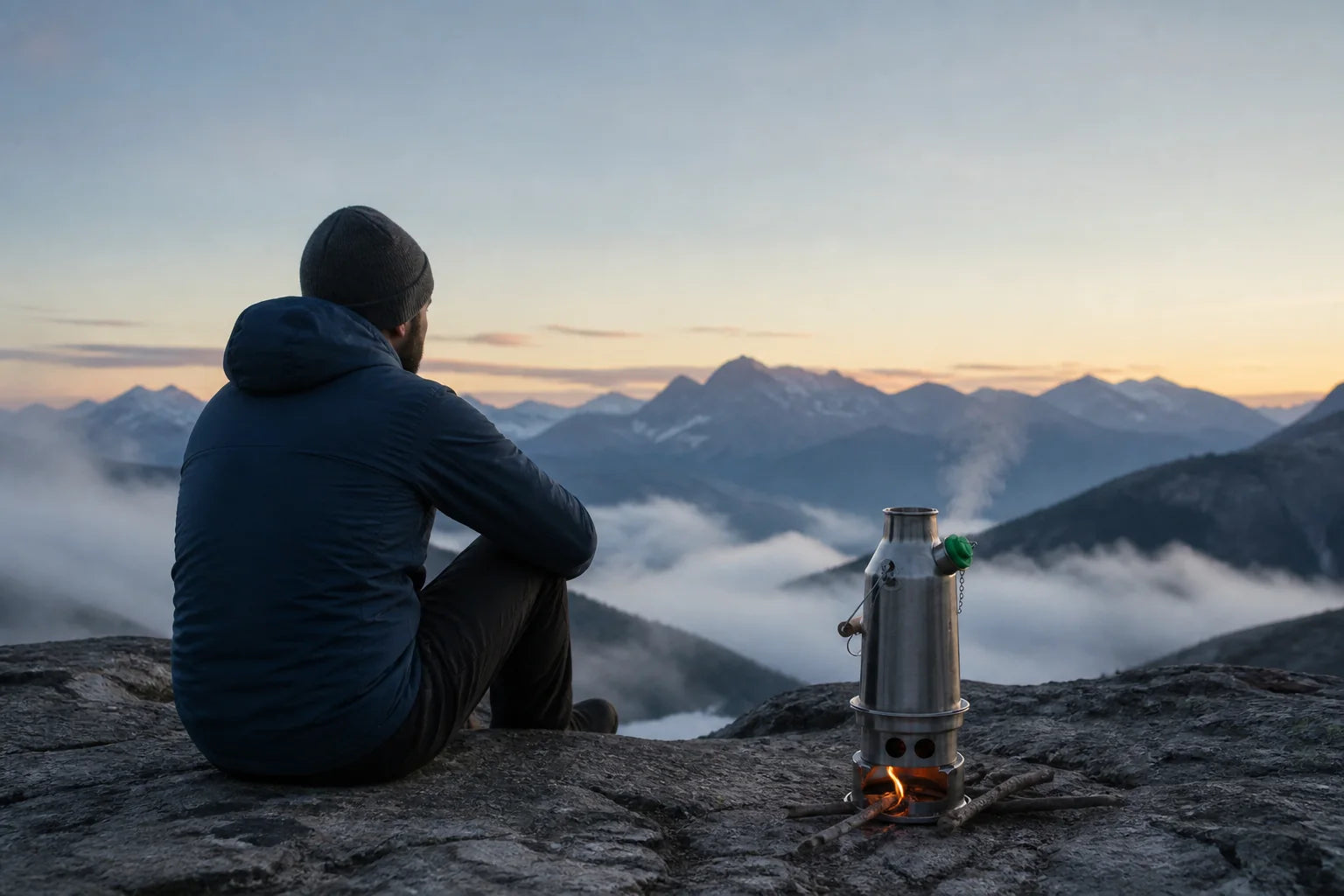
The Kelly Kettle Trekker is a complete solo camp kitchen built around a 130-year-old Irish chimney kettle. Feed it twigs, pine cones, or bark — get boiling water in about 3 minutes. No canisters to carry. Nothing to run out of.
A normal camp stove burns fuel you carried in. The Trekker's double-wall chimney runs the fire straight up through the middle of the water jacket — so almost all the heat goes into your water instead of the sky.
Dry sticks, pine cones, bark, grass. The stuff covering every campsite on earth drops straight into the fire base.
The flame funnels through the sealed central chimney, surrounded on all sides by water. It boils in roughly three minutes.
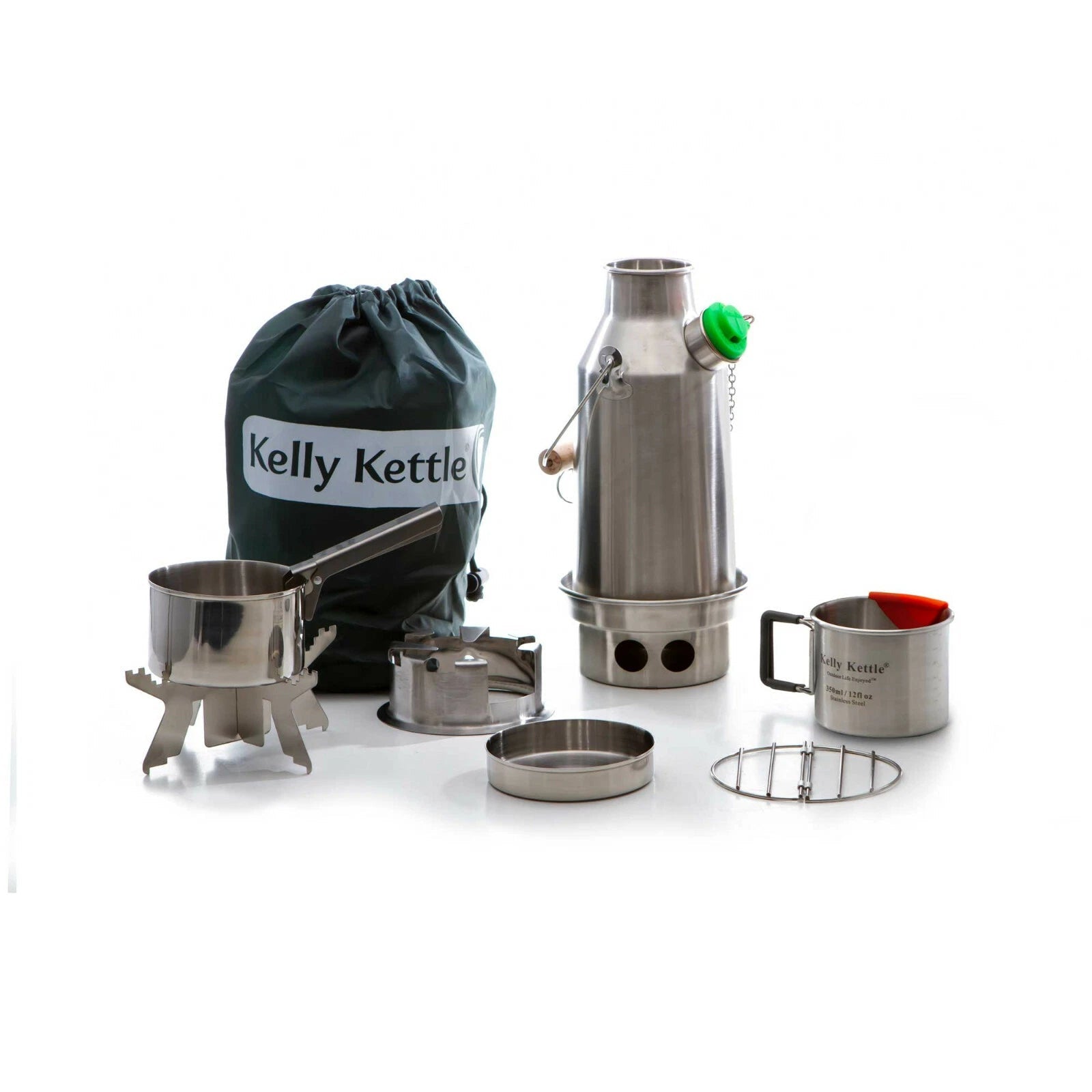
Coffee first. Then swap in the cook set, grill, or hobo stove and the same little fire makes breakfast.
Seventy-five seconds at a real campsite. No cuts to a studio — just twigs, fire, and boiling water.
Tap play — sound on.
Every canister camper knows the failure modes. The Trekker doesn't have them.
Canister pricing based on typical 230g mixed-fuel canister prices at outdoor retailers.
The same handful of twigs that makes your coffee runs your whole morning. Here's a normal day out with the Trekker.
Strike a match, drop in last night's leftover tinder, feed a few dry sticks. Whistle screams in three minutes. Pour over grounds in the camp cup — the silicone CooLip rim means no burned lip while you sip watching the lake.
Swap the kettle for the hobo stove insert. Bacon and eggs in the frying pan, oats in the pot. The two-piece grill holds everything steady over the coals.
Noodles or soup over the chimney on the pot support while the kettle boils below it. Two jobs, one fire, nothing carried in but the food itself.
Dehydrated meal rehydrated with water you boiled on site. Then a second kettle of hot water for washing up — the part every other stove makes you dread.
Last burn of the night. Everything nests back into the bag in under a minute, ash stays in the fire-base, and the forest looks like you were never there.
Everything nests inside everything else and disappears into the drawstring bag. Your whole kitchen weighs less than a bag of dog food.
Between the chimney, the hobo stove, and the grill, one little fire handles a real menu:
Fast items cook right over the chimney on the pot support while the kettle boils underneath. Anything needing steady heat goes on the hobo stove or the grill over coals. One fire, three cooking surfaces.
One kettle. Three jobs. The same fire that boils your water runs the stove that cooks your breakfast.


The Kelly Kettle has been built by the same Irish family since the 1890s, first for farmers working far fields where carrying fuel wasn't an option. The chimney-through-the-water design worked then because it was simple. It works now for exactly the same reason.
There's no valve to fail, no jet to clean, no regulator to ice up. Food-grade stainless steel, laser-welded without rivets. When something this simple is made this well, it becomes the kettle you hand down.
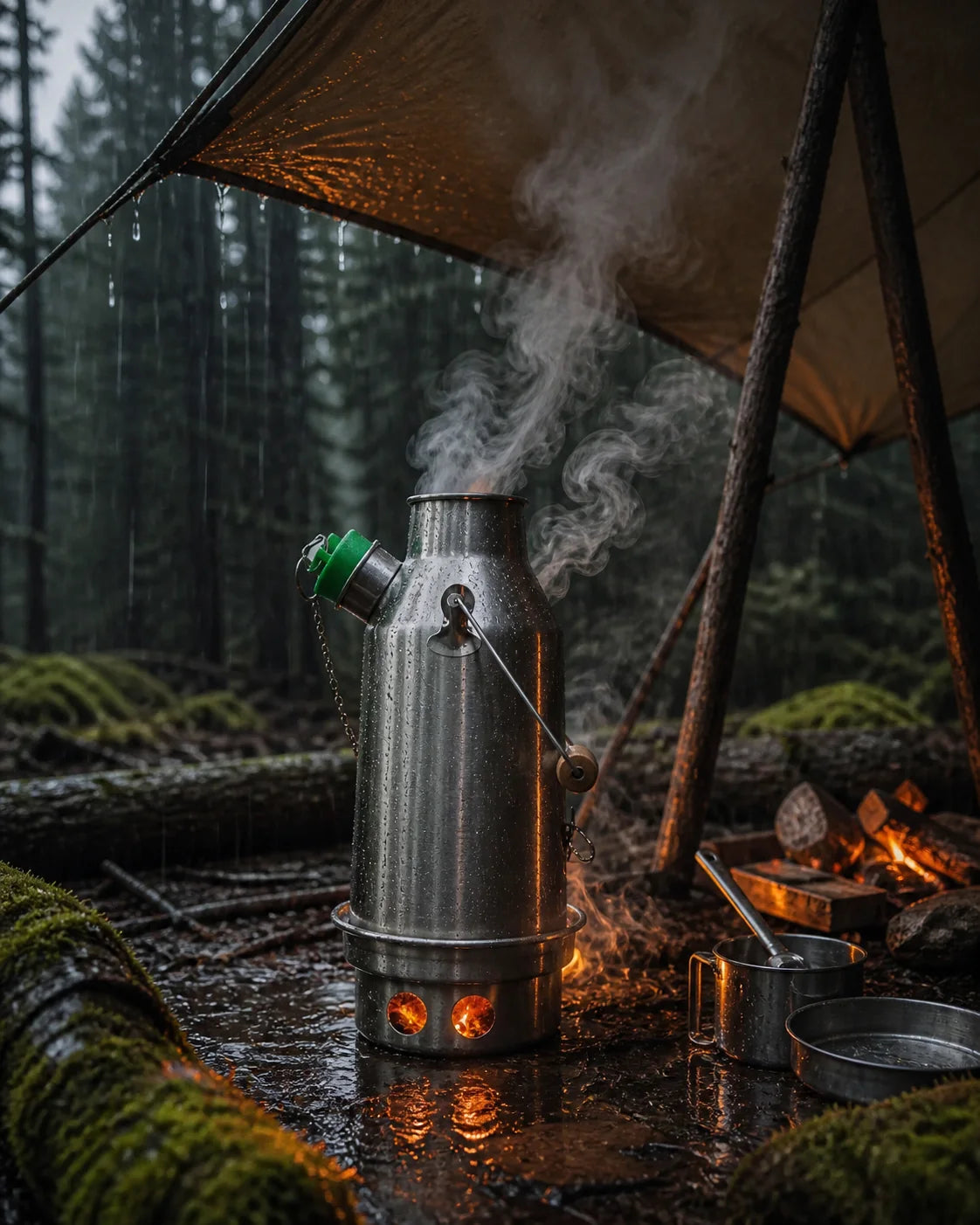
Gas stoves fail when conditions turn. This was invented for places where quitting isn't an option.
Fuel tablets soak and won't light. Dry tinder lives under fallen logs and overhangs year-round.
Canister pressure collapses near freezing. A stick fire burns identically at 70°F and 15°F.
The flame sits protected inside the chimney channel instead of flickering in open air.
No pressurized fuel to starve at elevation. If there's wood, there's boiling water.
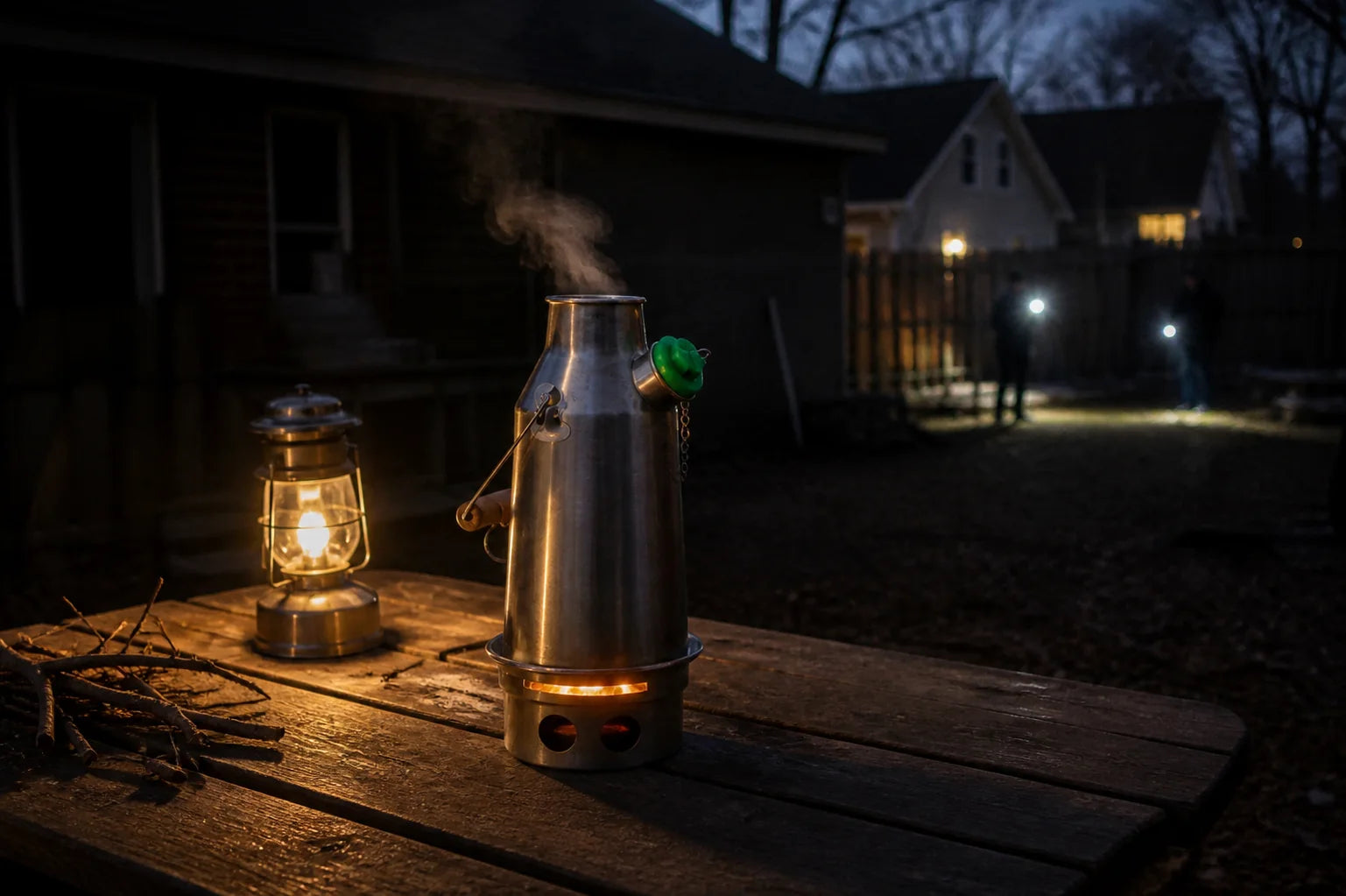
The same kit that runs your campsite is the piece of your storm plan that actually does something. No grid, no gas line, no problem — step outside and put the backyard to work.
Coffee, tea, instant meals, warm wash water — as long as the yard has sticks, you have hot water.
No waiting in a fuel line before the storm hits. Your fuel supply grew on its own.
The whole kit packs to the size of a boot and needs zero maintenance on a shelf.
For the man who owns every gadget: he doesn't have this one. And it's the rare gift that gets used every single trip.
Yes — roughly three minutes for a full 20 oz once the fire is lit, using just a handful of dry twigs. That's the whole point of the chimney design: heat passes straight up through the water jacket instead of escaping around the sides.
Dry biomass — sticks, pine cones, bark, dry grass. Anything small and combustible that's already on the ground where you're camping. No canisters, no tablets, no propane, nothing to buy or carry.
That's where it beats gas. There's no canister pressure to drop in cold or at altitude, and the flame sits protected in the fire-base. Wind and rain slow the twigs, not the kettle.
No — this is the full Trekker kit. Kettle plus cook pot, frying pan, hobo stove insert, two-piece grill, pot support, camp cup, and carry bag. The kettle boils water while the same fire runs the cooking hardware.
The complete kit is 2.57 lb (1.17 kg) and packs down to about 10.4 inches tall. Everything nests together and rides in one drawstring bag.
Coffee, oatmeal, noodles, soup, rice, dehydrated meals, eggs and bacon on the hobo stove, grilled items over the coals, even popcorn over the chimney. Fast items cook right over the chimney while the kettle boils below.
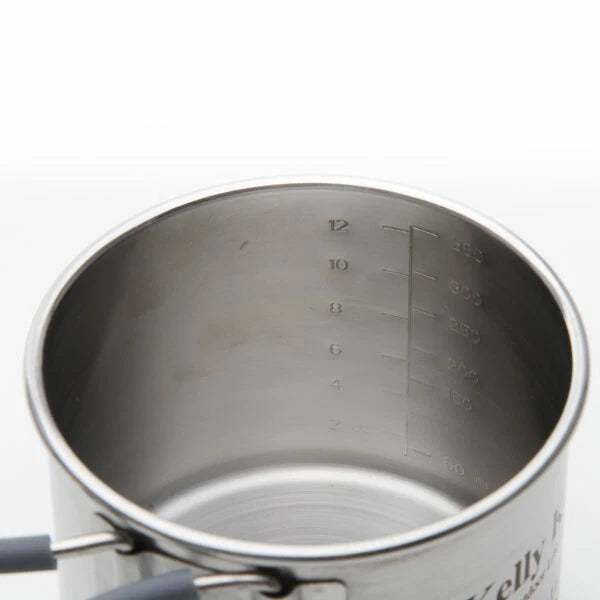
The interior is polished stainless steel with measurement markings — swish some of the hot water you just boiled, dump it, done. The fire-base taps out into a fire pit or bag. No jets, no crevices, no soot-caked valves.
It's a real fire, used outdoors. Light it on bare dirt, rock, or the included pot support, keep kids clear while it's lit, and never run it with the spout corked — the whistle stopper tells you when it's boiling without sealing pressure in.